
Finding Resilience, Joy and Our Identity in Jesus Christ Lesson Eight
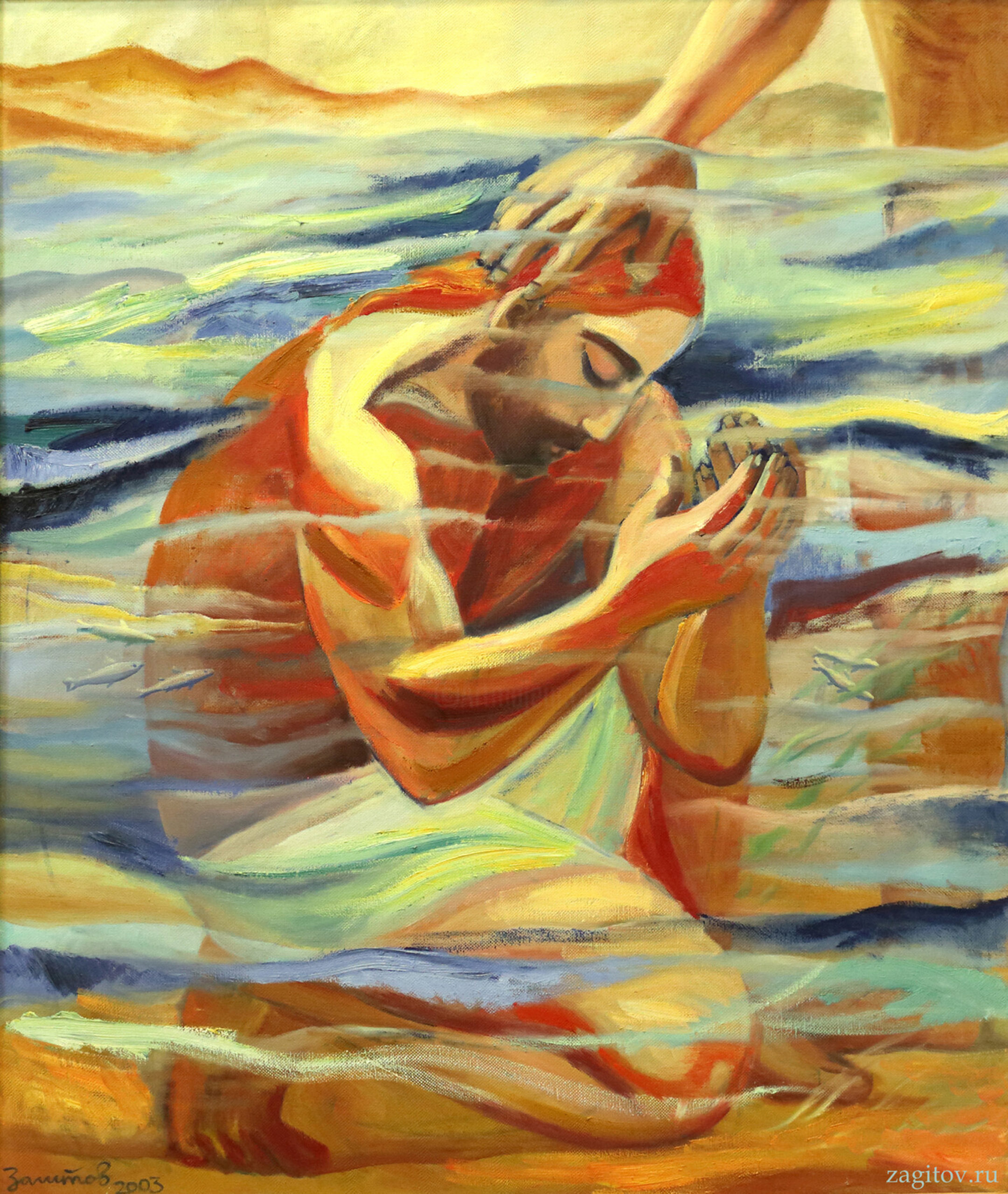
Lesson Eight: Remembering Jesus’ Baptism
Scripture: Luke 3:1–22, Matthew 3:1–17, Mark 1:1–11, John 1:19–34
Who Are You?
At different phases of our life, we become confused about who we are. We may even have different identities for different places and groups of people. We may hear ourselves talking or see ourselves in a mirror and not recognize who we are.
At dinner parties and social gatherings, people we meet ask us, in a number of ways, “Who are you?” Often, we start with our work—what we do or, if retired, what we did. Sometimes, we identify ourselves as the spouse or partner of another or as the daughter or mother of a beloved family member. Rarely do we answer, “I am a child of God. I am your sister, your family. We are connected through our journeys of faith, and many of the external identifiers I could mention do not really matter, for I am spiritually and eternally bound.” Certainly, that’s a lot to say to someone who just met you and wants to know who you are.
The truth is that we don’t always know who we are at any given moment. Psychologist Erik Erikson coined the term “identity crisis” in 1968.[1] In his work, he focused on adolescents who are faced with changes in their bodies and perspectives. Once they get through this stage of development and forge their self-image, they become adults.
One would think that becoming adults would be the end of the process of reaching an understanding of who we are. We have also heard a lot about “mid-life crisis.” Coined by Dr. Elliott Jaques in 1965 in a paper on the working patterns of creative geniuses[2] and later popularized by author Gail Sheehy in her book Passages,[3] this occurs when one’s identity and self-confidence is shaken, often initiated by incidents that call attention to a person’s aging or mortality, and sometimes accompanied by feelings of a lack of accomplishment.
Curiously, a person with significant accomplishments may go through a midlife crisis. This manifests itself in a desire to reclaim one’s youth by making drastic changes to one’s current lifestyle. Interestingly, most people do not have this experience in life or if they do, it is mild and fleeting. This may be what we mean when we suggest that others are aging gracefully or aging beautifully.
A new sports car or a new lifestyle may feel good—and in some cases, as with a commitment to exercise and healthy eating, a change may be good for you—however, drastic changes are not always good. They can be a stressful and traumatic stage of adult life. They can also, though, present themselves as opportunities for growth.
A Christian’s answer to a crisis of identity is to remember who we are. Our core identity is as children of God. And, the next step is to reclaim whose we are. We belong to God. When we are lost, we can find and claim our identity in Christ.
In Lesson eight of the 2025–2026 PW Horizons Bible study, we read about Jesus’ baptism. Remembering Jesus baptism helps us to reclaim our own baptismal identity. Jesus’ mission had to do not only with water but also with Spirit. Could reclaiming our Christian identity have to do with being filled with God’s Spirit? Does the Spirit play a crucial role here? Is it possible that part of how we rediscover and reclaim our identity in Christ occurs when we participate in practices of spiritual renewal?
For ages, people have studied scripture, read devotionals, engaged in daily prayer, gone on silent retreats, held worship outside at campsites, engaged in Lenten and Advent practices, practiced meditation and mindfulness, and joined with others at retreats and gatherings of the church.
Just as the dove was a sign to Noah that the waters of the flood were receding and that a completely new covenant by God with all humankind was being struck (Genesis 8–9), so, perhaps, the Spirit-dove signaled that God in Jesus Christ was doing something new in relationship to all humankind (Luke 3:22).
At Jesus’ baptism, the Spirit descended upon Jesus affirming his identity as God’s beloved child. And for those in the crowd, many of whom were baptized with Jesus that day, and for those of us reading this passage today, the visible sign of the Spirit shows the beginning of a new way through Jesus Christ.
Wouldn’t it be amazing if God is here doing something new with us even today in this stage of our lives?
[1] Erik Erikson, Identity: Youth and Crisis (New York: W.W. Norton & Company, 1968 First Edition).
[2] Elliot Jaques, “Death and the Mid-Life Crisis,” International Journal of Psychoanalysis, Vol. 46, October 1965, 502-514.
[3] Gail Sheehy, Passages: Predictable Crises of Adult Life, (New York: Dutton, 1976 First Edition).
By Rev Dr. Rhashell D. Hunter
Author of the 2025–2026 PW/Horizons Bible study, Finding Resilience, Joy, and Our Identity in Jesus Christ.
This blog is the eighth in a series of nine blogs.
Finding Resilience, Joy, and Our Identity in Jesus Christ is the Presbyterian Women in the PC(USA), Inc. Bible study for 2025–2026. Go to presbyterianwomen.org/bible-study/resilience to find more resources and copies for you and your group to study along with us. Call 800/533-4371 or order online.
