
Finding Resilience, Joy and Our Identity in Jesus Christ Lesson Nine
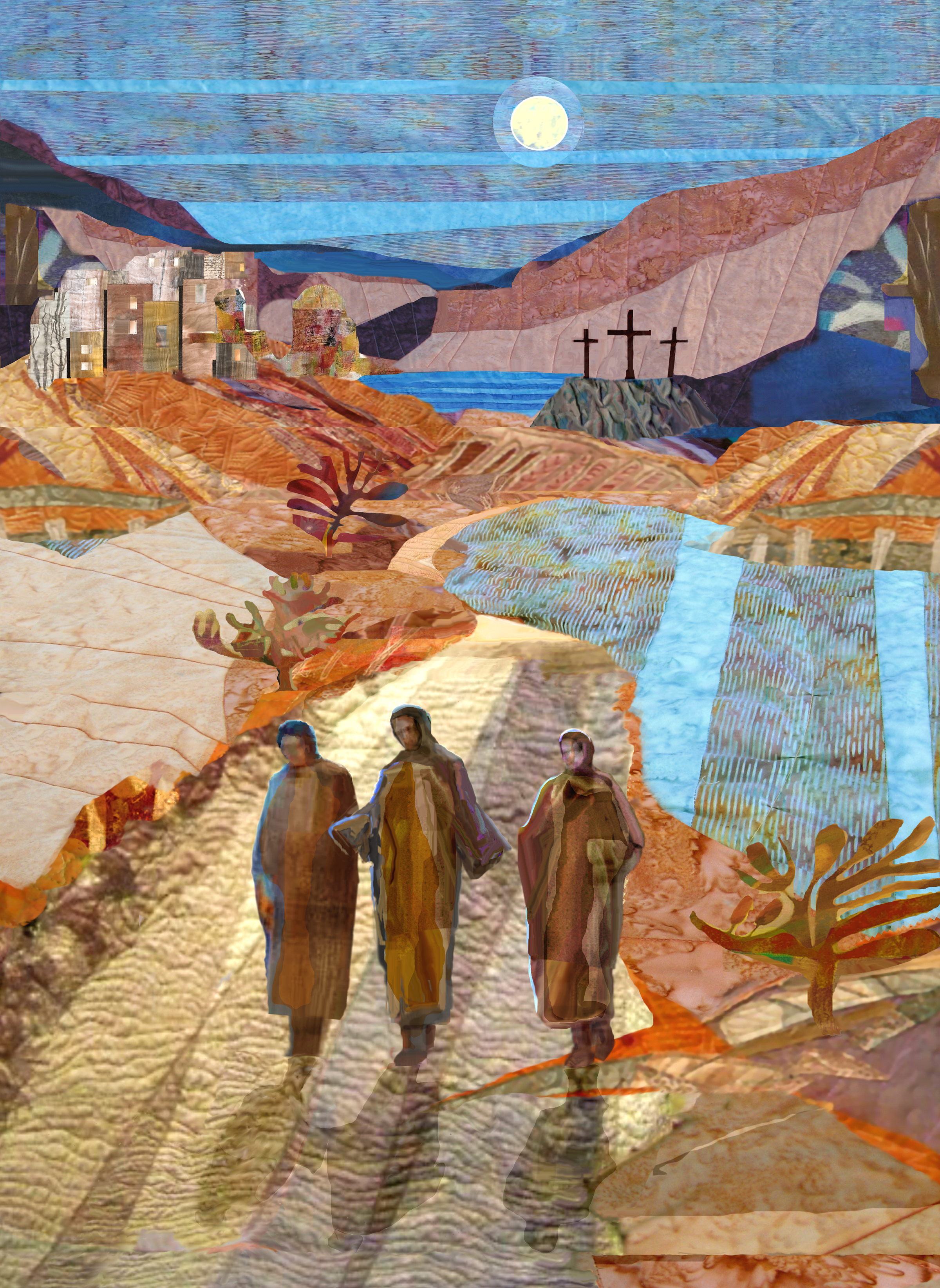
Lesson Eight: When You Are Walking with Jesus: The Road to Emmaus
Scripture: Luke 24:13–35
Are Women Believed?
I have been in meetings when a woman has come up with a great idea, and not only was the idea not accepted, it was never acknowledged. Then, ten minutes later a man proposed the exact same idea, and the leader said, “What a great idea. Let’s do that!” This has happened numerous times, so much so that I thought a colleague of mine was invisible.
Some of us are the ones to interject, “You know, Cynthia just said that fifteen minutes ago.” Or, “The new strategy we are implementing was Jeanne’s idea. Thank you, Jeanne.”
Sometimes, a group of us women would take a male colleague with us to a meeting where an important issue was being discussed, because, more likely than not, if he repeated what we said, the leader listened to him.
Are women believed?
In this lesson’s story from the Gospel of Luke, the travelers walking to Emmaus rushed back to Jerusalem and reported to the disciples, the women, and others that they had seen the Lord.
Wait a minute. Why were they so sad and glum on the road to Emmaus in the first place?
In your Bible, look before the walk to Emmaus and read Luke 24:5–9. The women go to the tomb early in the morning and see two angels who ask them, “Why do you look for the living among the dead?” (25:5). Then they remember that Jesus told them that he will rise again. They go and tell this “to the eleven and to all the rest.”
So, if the women already reported that Jesus had risen, why does Luke 17 say that the travelers on the road to Emmaus “. . . stood still, looking sad.” Shouldn’t they have been somewhat hopeful at the possibility that Jesus had indeed risen? Why didn’t they remember, just like the women did, Jesus telling them that he would rise again?
If you were one of the women who told the eleven and “all the rest” that Jesus had risen, how would you feel upon hearing from the Emmaus travelers that Jesus had risen? Didn’t you already tell them that?
Luke 24:22–24 reads, “Moreover, some women of our group astounded us. They were at the tomb early this morning, and when they did not find his body there they came back and told us that they had indeed seen a vision of angels who said that he was alive. Some of those who were with us went to the tomb and found it just as the women had said.”
This sounds eerily familiar, just like when I sat in meetings and heard women share great ideas, and for some reason, it was like their voices were muted, like you might push the mute button on your TV or phone.
But, these women had voices, ideas, ministries, and names. Luke 24:10–11 reads, “Now it was Mary Magdalene, Joanna, Mary the mother of James, and the other women with them who told this to the apostles. But these words seemed to them an idle tale, and they did not believe them.”
Again I ask, are women believed?
Sure, the disciples were grieving and emotionally compromised, and maybe they had to see Jesus for themselves to believe. A strategy of the gospel writer Luke was to quote the most compelling witnesses, who in his mind were male. In Lesson One of the Bible study, we discussed why Mary the Tower (or Mary Magdalene) may have been diminished. Was this possibly to make way for Peter the Rock? Luke may have wanted to establish Peter’s role as a key apostolic witness. Was he a more credible witness to the resurrection? Women’s testimony was most likely not believed. They had no legal standing to be witnesses in court, so how could they be witnesses to the resurrection of Jesus?
But let’s give Luke more credit as a gospel writer. That the apostles think the women’s testimony was an idle tale is part of Luke’s intended narrative. Luke shows these women sharing good news of the resurrection. The male disciples did not understand when Jesus said he would rise again or they did not believe that he would rise so soon. The women, on the other hand, were the ones who believed first, the ones who were at the tomb first, and the ones who went and told of the resurrection first.
Maybe that the Bible includes women as first witnesses is further evidence that the resurrection actually happened, as convention would have it that this testimony would come from men. Jesus apparently had a different plan. Jesus believed in Mary the Tower and the women to carry his message into the world. He trusted them with sharing the Easter message, “Christ has risen. Christ has risen indeed!”
By Rev Dr. Rhashell D. Hunter
Author of the 2025–2026 PW/Horizons Bible study, Finding Resilience, Joy, and Our Identity in Jesus Christ.
This blog is the ninth in a series of nine blogs.
Finding Resilience, Joy, and Our Identity in Jesus Christ is the Presbyterian Women in the PC(USA), Inc. Bible study for 2025–2026. Go to presbyterianwomen.org/bible-study/resilience to find more resources and copies for you and your group to study along with us. Call 800/533-4371 or order online.
